

tel
:+86 - 17718123415
E-mail
:info@sailsolaress.com
Panoramica
A partire dal 1° maggio 2026, la Banca europea per gli investimenti (BEI) e il Fondo europeo per gli investimenti (FEI) hanno introdotto una nuova serie di regole di esclusione dei finanziamenti per le apparecchiature di conversione di energia provenienti da regioni designate come "ad alto rischio". Questa politica riguarda gli inverter solari, le turbine eoliche e inverter PCS per accumulo di energia apparecchiature, costituendo una barriera commerciale non tariffaria basata sull'accesso ai capitali piuttosto che su un divieto di importazione diretto. Insieme all'articolo 28 del Net Zero Emissions Industries Act (NZIA), entrato in vigore alla fine del 2025, queste due norme insieme innalzano le barriere all'ingresso nel mercato per le aziende cinesi di inverter e sistemi di accumulo energetico che desiderano entrare nel settore europeo delle energie rinnovabili distribuite e su larga scala.
1. Termini fondamentali delle restrizioni di finanziamento della Banca europea per gli investimenti/Fondo europeo per gli investimenti
1.1 Ambito di applicazione e criteri di valutazione
La Commissione europea ha designato Cina, Russia, Iran e Corea del Nord come paesi ad alto rischio a causa dei rischi di cybersicurezza associati alle apparecchiature elettroniche di potenza connesse alla rete elettrica in questi paesi, in particolare quelli relativi alla trasmissione remota dei dati.
Copertura del prodotto: tutte le apparecchiature di conversione di potenza non idonee per le esenzioni dalla potenza nominale, inclusi gli inverter residenziali a bassa potenza, commerciali e inverter di stringa industriali, inverter centralizzati su larga scala e la gamma completa di sistemi di accumulo di energia PCS. Sono inclusi anche i convertitori per l'energia eolica.
Progetti applicabili: Tutti i progetti di energia rinnovabile finanziati dalla Banca europea per gli investimenti, dal Fondo europeo per gli investimenti, dal Fondo europeo per la transizione verde, dalle banche nazionali di sviluppo e dal Programma di cooperazione transfrontaliera dell'UE. I progetti situati nei Balcani occidentali e nel Nord Africa e collegati alla rete elettrica dell'UE sono soggetti alle stesse regole.
Criteri di identificazione delle entità: Le restrizioni si applicano non solo alle apparecchiature prodotte nei quattro paesi sopra menzionati, ma anche ai prodotti fabbricati da entità possedute o sostanzialmente controllate da soggetti interessati in questi paesi, anche se gli impianti di produzione si trovano all'interno dell'UE. Il Comitato europeo per la produzione di energia solare (ESMC) ha confermato che non saranno concesse esenzioni per la produzione locale nell'UE da parte di marchi di proprietà cinese.
1.2 Tempistiche obbligatorie e disposizioni di esenzione per i casi pregressi
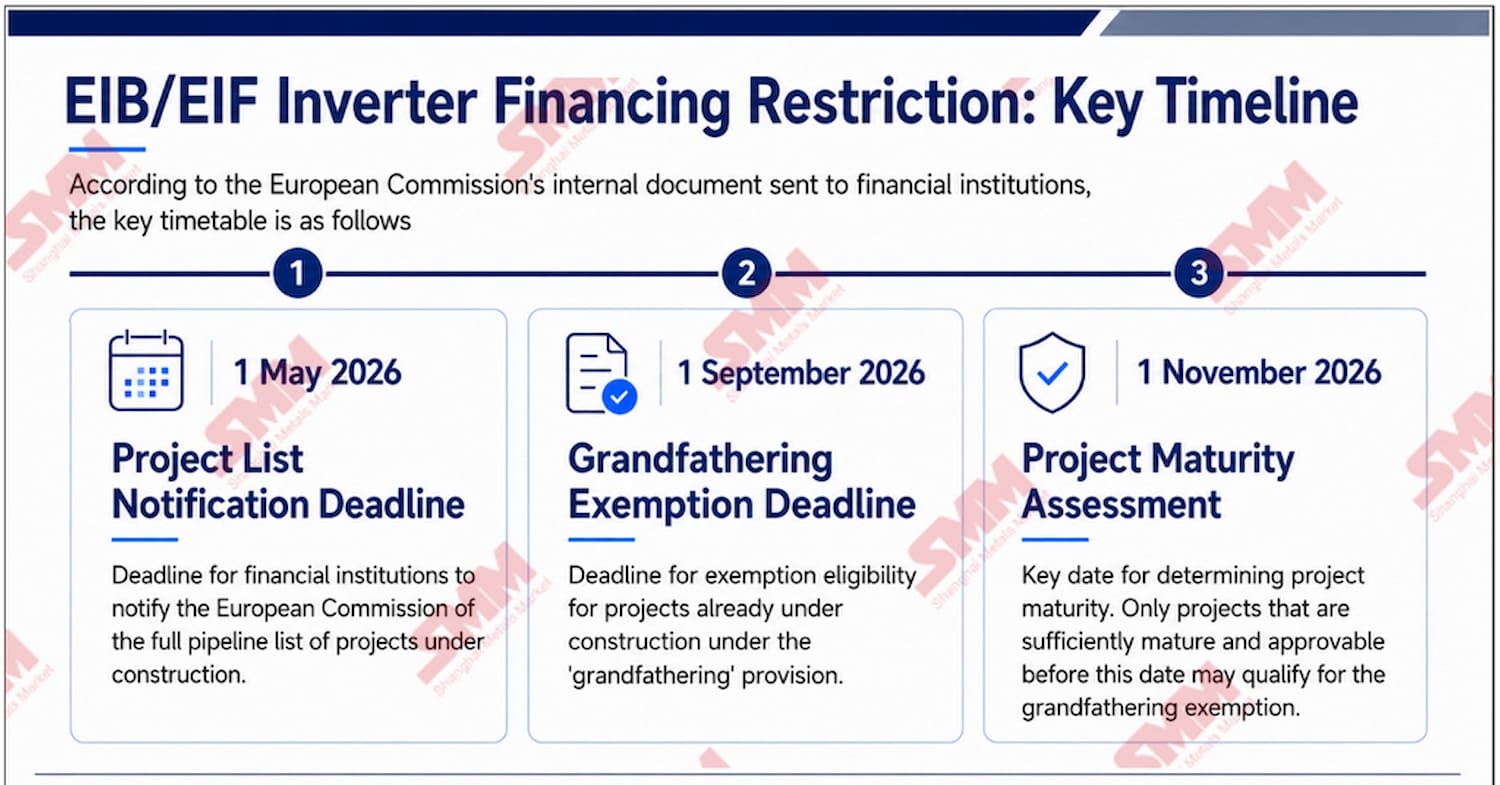
1° maggio 2026: Data di entrata in vigore ufficiale della politica; tutti gli istituti finanziari partecipanti presentano alla Commissione europea una relazione completa sul loro portafoglio di progetti di energia rinnovabile in corso e pianificati.
1° settembre 2026: termine ultimo per la presentazione delle domande di esenzione dalle disposizioni preesistenti per i progetti di costruzione.
1° novembre 2026: termine ultimo per la valutazione finale dell'ammissibilità all'esenzione. Solo progetti maturi con fornitura di attrezzature vincolata e senza alternative praticabili. inverter ibrido per accumulo di energiaGli spazi dei fornitori PCS sono ammissibili a esenzioni a lungo termine. I progetti in fase iniziale e adattabili non sono ammissibili alle esenzioni, indipendentemente dal fatto che sia stata presentata una domanda in precedenza.
15 aprile 2027: termine ultimo per la graduale eliminazione degli inverter/PCS dalle giurisdizioni ad alto rischio dopo il collegamento alla rete europea dei progetti extra-UE.
1.3 Accordi di finanziamento supplementari ed eccezioni alle politiche
La Banca europea per gli investimenti ha istituito un fondo dedicato di 2 miliardi di euro per il finanziamento delle energie rinnovabili, specificamente destinato a progetti che utilizzano apparecchiature di conversione dell'energia provenienti da giurisdizioni non ad alto rischio. Questo fondo coprirà circa il 20% della capacità solare installata nell'UE entro il 2025.
Esenzioni esplicite dalle politiche: i componenti passivi e i semiconduttori di potenza principali (IGBT, MOSFET) utilizzati negli inverter e nei PCS sono esenti da restrizioni. I fornitori cinesi di semiconduttori a monte possono continuare a rifornire i produttori europei di inverter senza barriere all'accesso ai finanziamenti.
2. Restrizioni armonizzate: dettagli di attuazione dell'articolo 28 della legge neozelandese sugli investimenti (NZIA)
L'articolo 28 della NZIA, che entrerà in vigore il 30 dicembre 2025, definisce i criteri di ammissibilità di origine per i sussidi UE al solare distribuito per uso residenziale e commerciale e viene attuato in parallelo con i limiti di finanziamento per i grandi progetti stabiliti dalla Banca europea per gli investimenti:
- Otto componenti principali dei moduli solari richiedono la verifica dell'origine: polisilicio, lingotti di silicio, wafer di silicio, celle solari, vetro fotovoltaico, moduli, inverter e inseguitori solari.
- Requisiti di ammissibilità per i sussidi:
I moduli fotovoltaici non devono essere assemblati in Cina;
Le celle solari e gli inverter non devono essere prodotti in Cina;
Almeno quattro degli otto moduli devono provenire da un paese terzo non fortemente dipendente, e l'inverter e le celle devono essere tra questi quattro moduli ammissibili.
- I sistemi che non soddisfano nessuna delle suddette regole di origine non saranno idonei a ricevere i sussidi ecologici dell'UE per consumatori e imprese. Questo duplice quadro normativo riguarda gli impianti fotovoltaici a terra su larga scala, i sistemi di accumulo autonomi e gli impianti fotovoltaici distribuiti residenziali, imponendo restrizioni a più livelli sui prodotti elettronici cinesi per l'energia solare.
3. Valutazione differenziata dell'impatto settoriale
3.1 Impatto a breve termine su ciascun segmento di mercato
Questa politica è un divieto di finanziamento, non un divieto di importazione: gli inverter e i sistemi di conversione di potenza (PCS) cinesi possono ancora essere importati e utilizzati in progetti interamente finanziati privatamente e che non richiedono finanziamenti pubblici dell'UE.
Impianti fotovoltaici a terra su larga scala e sistemi di accumulo autonomi: i più colpiti. Circa il 20% della capacità solare installata nell'UE e oltre il 30% dei progetti di accumulo su larga scala dipendono dalla Banca europea per gli investimenti/finanziamenti pubblici europei. Gli sviluppatori dovranno affrontare costi più elevati per l'approvvigionamento di apparecchiature alternative, cicli di consegna più lunghi e ripetuti test di compatibilità del sistema, con conseguente aumento del costo livellato dell'energia elettrica (LCOE) complessivo dei progetti.
Fotovoltaico distribuito residenziale: impatto diretto minimo, poiché la maggior parte degli impianti residenziali si basa su capitali privati piuttosto che su prestiti istituzionali dell'UE.
Mercato dei sistemi di accumulo di energia (PCS): più gravemente colpito rispetto agli inverter solari. Progetti di stoccaggio energetico su larga scala In Europa, la dipendenza dai finanziamenti bancari è molto forte, mentre le soluzioni integrate batteria-PCS dei produttori asiatici rischiano di essere costrette a suddividere i moduli o a cambiare fornitore. La limitata capacità produttiva locale europea di PCS determina un divario di offerta più ridotto rispetto a quello degli inverter solari.
3.2 Tendenze di adeguamento della catena di approvvigionamento a medio termine
I produttori di inverter nell'UE, negli Stati Uniti, in Giappone e in Corea del Sud hanno annunciato piani di espansione della capacità produttiva, supportati dal Net Zero Emissions Industry Act e dai sussidi previsti dal Clean Industry Agreement. Tuttavia, il processo di sostituzione si scontra con ostacoli strutturali:
Gli elevati prezzi dell'elettricità per l'industria, i rigidi costi del sistema di scambio di quote di emissioni dell'UE (EU ETS) e le severe norme di conformità ambientale hanno aumentato i costi di produzione per le fabbriche europee locali;
L'UE non dispone di una catena di approvvigionamento fotovoltaica completa a monte, e si affida alle importazioni per i wafer di silicio, le celle e le materie prime fondamentali;
Il lungo ciclo di investimenti necessario per la produzione di impianti fotovoltaici, che richiede ingenti capitali, ostacola il rapido afflusso di investimenti nel settore manifatturiero locale.
3.3 Limitazioni delle misure di mitigazione locali dell'UE in materia di stabilimenti produttivi
La strategia tradizionale delle aziende cinesi di stabilire stabilimenti all'interno dell'UE per aggirare le barriere commerciali non è più efficace con le nuove normative. Indipendentemente dal luogo di produzione, finché la Cina detiene una partecipazione o un controllo sostanziale, si applicheranno le stesse restrizioni finanziarie. La ristrutturazione azionaria e la separazione dei marchi delle joint venture saranno soggette a rigorosi controlli sostanziali da parte delle istituzioni finanziarie dell'UE.
4. Valutazione prospettica del mercato
**Rischio di ricaduta politica:** Il modello di esclusione dei capitali dell'UE utilizza le norme sul finanziamento per eludere i dazi antidumping formali dell'OMC. Il Regno Unito, gli Stati Uniti, l'Australia e altri importanti mercati delle energie rinnovabili potrebbero seguire l'esempio, creando una pressione normativa transregionale sugli esportatori cinesi di inverter e PCS.
**Ambito di applicazione limitato dell'esenzione:** Solo una piccola parte dei progetti definiti entro novembre 2026 potrà beneficiare dell'esenzione; i fornitori cinesi dovranno accelerare la consegna degli ordini europei esistenti entro il periodo di conformità.
**Opportunità di riserva per i semiconduttori a monte:** I componenti a semiconduttore di potenza senza restrizioni rimangono un settore di esportazione stabile per i produttori cinesi a monte, con una crescita della domanda strettamente legata all'espansione della capacità produttiva locale di inverter europei.
**Persistente carenza di offerta nel 2027-2028:** I costi strutturali e i vincoli della catena di approvvigionamento impediranno alla capacità produttiva locale europea di sostituire completamente la fornitura cinese di inverter e PCS nel breve-medio termine, sebbene la produzione di terzi in Turchia soddisferà gradualmente parte della domanda.
**Incertezza di attuazione:** La Commissione europea non ha ancora pubblicato testi normativi ufficiali, che presentano ancora alcune ambiguità irrisolte, tra cui i criteri dettagliati per l'identificazione dei controlli sostanziali e la potenziale espansione futura dell'elenco dei componenti soggetti a restrizioni.
Vi state chiedendo se il vostro progetto europeo sarà influenzato dalle normative di conformità degli inverter?
Descriveteci la portata del vostro progetto e la tipologia di finanziamento, e vi forniremo gratuitamente un piano di configurazione conforme alle normative.
Come si selezionano gli inverter per i progetti di accumulo di energia nell'UE che soddisfino i requisiti normativi?
Contatta il servizio clienti per ricevere la "Guida per evitare le insidie nella selezione delle apparecchiature per impianti solari con accumulo nell'UE".
In ottemperanza alle nuove normative UE, stiamo lanciando unità PCS conformi alle normative locali, inverter personalizzati senza connettività cloud e sistemi completi di accumulo di energia.
Accogliamo con favore richieste di informazioni e opportunità di confronto tra soluzioni.
 Rete IPv6 supportata
Lasciate un messaggio
Scansione su Wechat :

Scansione su WhatsApp :